

How to Test Thermal Labels for Ocean Freight Handling
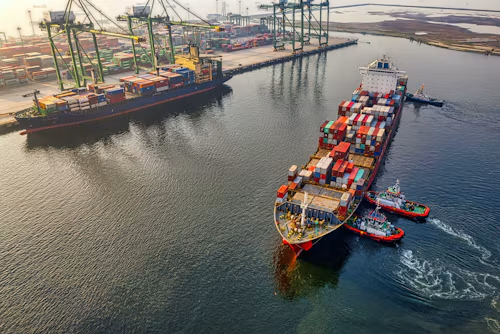
Ocean freight can expose cartons to long storage, humidity, abrasion, and repeated scans. A label that works during a short domestic parcel trip may become unreadable or detach before a container reaches its destination. The choice should be based on the complete route and required label life, not only on what prints clearly on dispatch day. Direct thermal media may suit some short portions of the workflow, while a more durable construction may be necessary for longer exposure.
Map every point where identification is needed
List the warehouse, port, vessel, customs, inland transfer, and destination scans. Record the longest expected time between printing and the final scan. Identify whether the label is on an individual carton, shrink-wrapped pallet, or weather-exposed crate. A label under stretch wrap may be protected from abrasion but distorted by glare; a label outside the wrap is easy to scan but more exposed.
Determine which code must survive. A carrier shipping label, pallet serial shipping container code, and internal item code may have different formats and owners. Do not place several active routing codes side by side without a clear scan plan. For globally traded units, use the applicable barcode standard and customer specification rather than inventing a local format.
Simulate the damaging conditions
Print the real layout on the candidate thermal labels. Apply them to the actual carton or wrap under normal line conditions. Expose samples to the expected humidity and temperature cycle, then rub and stack them as the shipment will be handled. Inspect both the image and the adhesive. Darkening, fading, edge lift, and scuffed quiet zones are separate failure modes.
Use the scanner type likely to be used at the destination if possible. A phone scan on the packing bench is not an adequate substitute for a warehouse scanner reading a pallet from a distance. Record first-pass reads after exposure. If a code can be recovered only after wiping, flattening, or tilting, the process is fragile.
Decide when direct thermal is enough
Ask the supplier of direct thermal label rolls about the intended image life and coating, but verify those claims on the actual route. If a label must remain readable for many months, in strong light, or after rough handling, compare thermal transfer or another durable method. This is a performance choice, not a verdict that one printing technology is always better.
Approve the material with a sample shipment or controlled simulation, then document the label location and replacement rule if cartons are repacked. Keep an unexposed control sample from the same roll. When a label fails at destination, that control helps determine whether the cause was print quality, environment, or handling.
Protect traceability through repacking
Ocean shipments may be inspected, consolidated, or repalletized. Decide which identifier persists when a carton is moved from one pallet to another. The original carton code should remain readable or be replaced through a recorded process that links old and new identities. A new pallet label placed over an old active one can confuse receiving staff and automated systems. If the shipment has multiple destination warehouses, distinguish the container-level instruction from the individual carton destination.
Include customs and customer documents in the review. The visible carton description and encoded identifier should agree with the shipping record, though the label need not duplicate every document field. If a port agent must read the label without the warehouse system, keep the essential human-readable references large enough for the expected distance.
Set a release criterion
Define the final scan that matters and a minimum acceptable first-pass performance in the trial. Include a control group of ordinary parcel labels so the added value of a more durable construction is measurable. Inspect both print and adhesive after the simulated route. If the image fails but the label remains attached, change the imaging method or coating. If the label detaches but the print remains sharp, investigate the substrate and adhesive. This separation avoids paying for a premium face stock that does not solve the actual problem.
Build a route specific test
Create a timeline from packing through the last destination scan. Note the time spent in warehouses, on a vessel, and during inland movement. Identify whether cartons may sit near a container door, experience high humidity, or be repalletized. Use those conditions to choose a practical simulation. A generic water spray on a pristine label does not reproduce months of pressure, abrasion, and humidity changes.
Label several complete cartons and pallets with the real print file. Include the longest text and smallest barcode. Expose them to the planned conditions, then ask someone unfamiliar with the samples to scan them at the normal receiving distance. Record first-pass success and how much effort is needed for a recovery scan. Keep a control label in ordinary storage to show whether the image changed because of the route or because the printer was producing a weak code from the start.
Review the human readable layer
Port and warehouse staff may need to identify a shipment even when their scanner or network is unavailable. Put the essential shipment reference and destination in readable text, but do not crowd the barcode. Check with customers which carton and pallet information they require. If a code encodes one ID and the printed text shows a different version, a manual recovery can send the goods to the wrong place.
When cartons are consolidated, avoid covering the original carton identity with pallet wrap labels. If a carton is relabeled, link the old and new identifiers in the record and obscure the retired code where necessary.
Decide on the printing technology
Direct thermal may be adequate for a protected, short-duration stage but less suitable for a long route with heat and abrasion. Compare it with a coated or thermal-transfer construction under the same test rather than making a general claim about either technology. Include printer and ribbon changes, label cost, and the consequence of a lost code in the decision. Select the least complex option that passes the required end-of-route scan, then lock the specification for repeat shipments.