
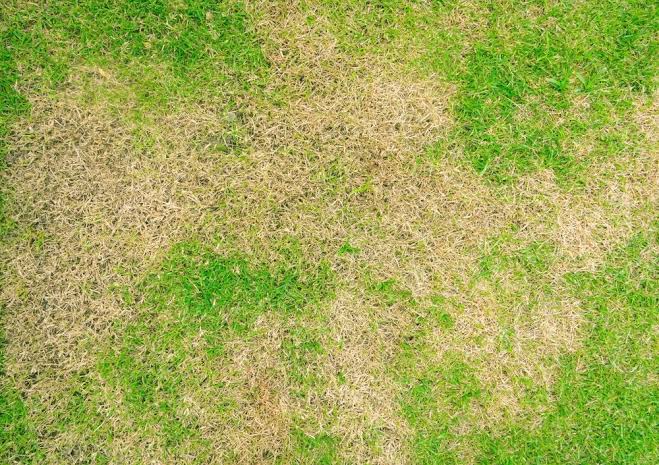
Dry Lawn Patches – Improve Growth With Better Care
Brown or thin areas in an otherwise healthy lawn often signal a local problem rather than failure of the entire yard. Dry lawn patches can develop because of uneven watering, compacted soil, mowing habits, heavy foot traffic, shallow roots, or difficult growing conditions.
Finding the pattern first makes lawn repair simpler and prevents repeated reseeding in an area where the original problem remains.
Look Closely at the Shape of the Dry Area
The location of a patch can reveal useful clues. Grass beside pavement may dry faster because concrete and stone absorb heat, while areas beneath trees may compete for both moisture and sunlight.
Small irregular spots may result from traffic or localized stress. Larger sections that follow sprinkler boundaries can point toward uneven irrigation.
Pull gently on the grass and inspect the soil beneath it. Dry soil several inches down suggests a different problem from soil that remains damp while the grass continues declining.
Check Whether Water Reaches the Whole Lawn
Sprinklers do not always distribute water evenly. A tilted head, blocked nozzle, changed water pressure, or growing shrub can leave one section noticeably drier.
General property care ideas may inspire broader maintenance work, but a simple lawn check is more useful here: place several shallow containers across the watering zone and compare how much water reaches each location.
Water the Root Zone, Not Only the Surface
Frequent light watering may dampen the top layer without encouraging deeper rooting. Grass with shallow roots can struggle quickly during warmer or windier periods.
Watering needs vary with grass type, soil, weather, shade, and local restrictions, so fixed schedules are not always reliable. Use the condition of the soil and lawn as the guide.
Improve Soil Conditions Around Weak Grass
Compacted ground limits the movement of water, oxygen, and roots. High-traffic locations are especially prone to becoming dense enough that irrigation runs across the surface instead of soaking evenly into the soil.
When planning broader outdoor improvements through residential garden inspiration, include lawn traffic patterns in the layout. Redirecting repeated walking or play away from a weak section can sometimes help more than adding extra fertilizer.
| Lawn Pattern | Likely Issue to Check | Useful Action |
|---|---|---|
| Dry edge by pavement | Heat and fast drying | Check moisture more often |
| Thin path across lawn | Foot traffic | Reduce traffic or aerate |
| Patch inside sprinkler zone | Uneven coverage | Inspect sprinkler pattern |
| Weak grass under trees | Shade and competition | Adjust grass or planting choice |
Mow in a Way That Protects the Grass
Cutting grass too short can reduce the leaf area available for growth and expose the soil to faster moisture loss. Scalping uneven ground is especially damaging because mower blades may remove much more growth from raised spots.
Landscape appearance matters, and outdoor styling references can provide visual direction, but a lawn should not be forced into a mowing height that leaves it continually stressed. Adjust maintenance to the grass and season.
Sharp mower blades also matter. Torn leaf edges lose their clean appearance and can make the lawn look dull shortly after cutting.
Avoid Treating Every Brown Patch the Same Way
Watering more is not automatically the answer. A stressed area can look dry even when the underlying problem involves poor drainage, disease, root damage, shade, or soil conditions.
Adding fertilizer without understanding the cause can also waste money and may increase stress. Before applying products, compare the affected area with healthy grass nearby and inspect moisture, roots, sunlight, traffic, and irrigation.
Frequently Asked Questions
Can dry lawn patches recover without reseeding?
Yes, when the grass is still alive and the underlying stress is corrected. Improving watering, mowing, traffic, or soil conditions may allow existing grass to fill back in gradually.
Why are lawn edges often browner than the center?
Edges beside driveways, walls, and paths can experience more reflected heat and faster moisture loss. Irrigation coverage may also be weaker along boundaries.
Should I water a brown lawn patch every day?
Not automatically. Watering frequency depends on soil, climate, grass type, and the cause of the browning. Check soil moisture first so you do not create a separate overwatering problem.
Repair the Cause Before Replacing the Grass
Treat a dry patch as a clue. Check irrigation coverage, soil condition, mowing height, sunlight, and traffic before buying seed or fertilizer. Once the source of stress is reduced, repair becomes easier because new or recovering grass is growing in conditions that can actually support it.