

Waterproofing Your Basement During Renovation: Why It Matters in Toronto
Renovating a home in Toronto is a major investment, and homeowners often focus on the visible upgrades that add value, such as custom finishes or expanded living space. Yet one of the most important, long‑term components of a successful project is frequently overlooked: basement waterproofing Toronto. In a city known for unpredictable weather, aging housing stock, and complex building standards, protecting a basement from water intrusion is not simply recommended, it is essential for safeguarding both the renovation and the home’s future resale potential. Route Homes, a leading Toronto renovation and construction company, emphasizes that no basement project is complete without a strategic and professionally executed waterproofing plan.
Why Toronto Basements Are Especially Vulnerable?
Toronto’s unique climate and geological makeup create conditions that make basements far more susceptible to water intrusion compared to many other Canadian cities. The city experiences freeze‑thaw cycles that exert constant pressure on foundation walls. Clay‑dominant soils swell and contract with moisture levels, causing cracks and shifting. Seasonal storms bring heavy rainfall and occasional flash flooding, while spring thaw pushes groundwater levels upward.
Compounding the environmental realities is the age of the city’s residential housing. Many homes were built decades ago using older construction methods or materials that no longer meet today’s waterproofing standards. Some neighborhoods also rely on outdated sewer systems or lack adequate drainage infrastructure, which increases the risk of hydrostatic pressure around the property. Homeowners facing these issues should consider professional basement waterproofing services in Arkansas to protect their foundations and prevent moisture-related damage.
Given these factors, waterproofing is not merely a preventative step. It is a foundational part of any renovation strategy. Without it, even the highest quality finishes, flooring, and framing become compromised, leading to mold, structural deterioration, or costly repairs that could have been avoided with proper planning.
Key Reasons Basement Waterproofing Should Be Part of Every Renovation
• Protects newly renovated spaces from moisture damage that can ruin flooring, insulation, and drywall
• Preserves structural integrity by minimizing pressure on foundation walls
• Reduces the likelihood of mold development, which impacts indoor air quality
• Helps maintain healthy humidity levels inside the home
• Enhances a property’s resale value by reassuring buyers that the renovation was done properly
• Ensures compliance with Toronto building requirements during excavation and renovation work
• Minimizes long term repair costs by addressing foundational issues before they escalate
Understanding Toronto’s Renovation and Waterproofing Regulations
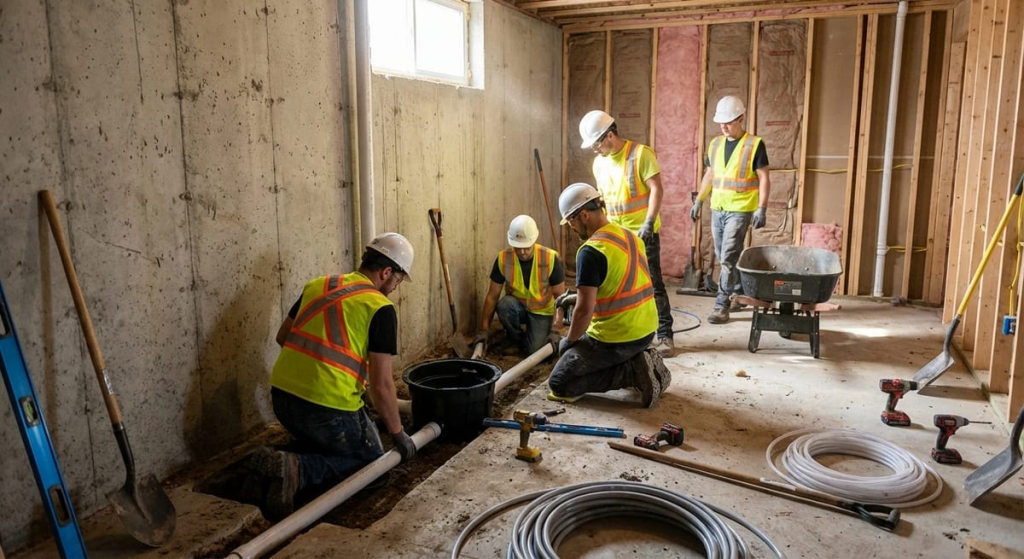
Toronto’s renovation landscape is heavily regulated, especially when it comes to foundation work, excavation, plumbing, and drainage. Homeowners must comply with municipal rules designed to protect properties, neighbors, and the city’s infrastructure.
The Toronto Municipal Code, particularly Chapter 681 related to Sewers, outlines strict requirements for sump pump discharges, backwater valves, and sanitary connections. Any renovation that modifies drainage or foundation walls typically requires permits through Toronto Building. Excavation deeper than 1.2 meters requires engineered drawings, and waterproofing work on exterior walls often involves inspections to verify compliance with the Ontario Building Code.
Renovations that alter plumbing lines must follow guidelines set by the Toronto Plumbing Inspection Division, especially when adding a basement bathroom or relocating floor drains. Projects in neighborhoods with heritage designations may also require additional reviews, even when the work is below grade.
Professional contractors like Route Homes manage these administrative requirements, ensuring the project aligns with city regulations and avoids delays or costly mistakes.
Common Waterproofing Methods Used in Toronto
- Exterior Waterproofing
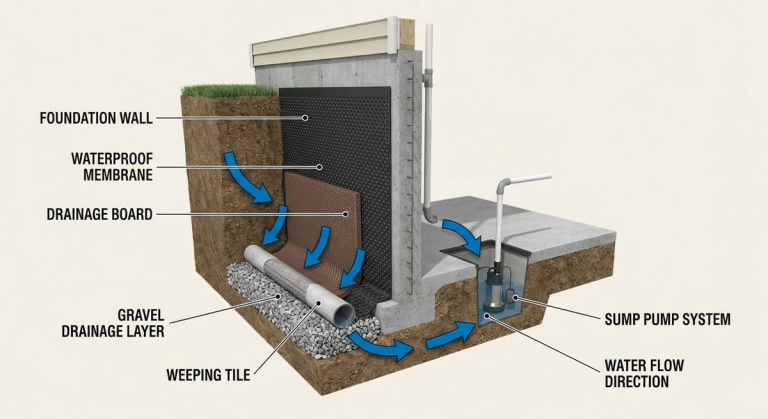
This method involves excavating around the home’s foundation down to the footing level. Workers install a waterproof membrane, drainage board, and weeping tile system to redirect water away from the structure.
- Interior Waterproofing
Contractors apply sealants, install interior drainage systems, and integrate sump pumps to control moisture. This method is often used when exterior access is limited.
- Crack Injection
Epoxy or polyurethane materials are injected into foundation cracks to create a seal and prevent seepage.
- Weeping Tile Replacement
Aging clay or metal drainage tiles are replaced with modern PVC systems that offer improved durability and water flow.
- Sump Pump Installation
Pumps move excess groundwater outside the home, reducing hydrostatic pressure around the foundation.
- Backwater Valve Installation
A critical component in Toronto homes, backwater valves prevent municipal sewage from backing into basements during storms.
Detailed Cost Breakdown for Toronto Basement Waterproofing
Below is a detailed cost range for common waterproofing services in Toronto. Prices vary based on foundation depth, soil conditions, accessibility, and the home’s age.
| Waterproofing Method | Typical Cost Range | Price Factors | Expected Longevity |
| Exterior Waterproofing | 120 to 300 CAD per linear foot | Depth of excavation, membrane type, landscaping restoration | 20 to 30 years or more |
| Interior Waterproofing | 70 to 180 CAD per linear foot | Drainage system, sump pump installation, interior finishes | 10 to 20 years |
| Crack Injection | 350 to 900 CAD per crack | Crack length, material type (epoxy or polyurethane), access | 10 to 15 years |
| Weeping Tile Replacement | 4,000 to 15,000 CAD | Trenching, tile material, connection to sump pump | 25 to 40 years |
| Sump Pump Installation | 1,500 to 4,000 CAD | Pump capacity, battery backup, discharge routing | 5 to 10 years |
| Backwater Valve Installation | 2,500 to 6,000 CAD | Permit requirements, pipe rerouting, inspection | 20 years or more |
Route Homes provides precise, project‑specific estimates after a site inspection that evaluates soil conditions, drainage patterns, and any existing foundation issues.
How Basement Waterproofing Integrates With a Renovation
Waterproofing is most effective when integrated into the renovation timeline rather than addressed afterward. When coordinating the full basement redevelopment, waterproofing typically occurs immediately after demolition and before new framing. This sequencing protects newly installed elements from moisture exposure and allows the crew to work efficiently with open access to the foundation walls.
Exterior waterproofing is most feasible when landscaping or grading adjustments are already planned. If the renovation involves walkout basement construction or underpinning to increase ceiling height, waterproofing becomes even more critical due to foundational exposure.
Interior waterproofing often coincides with plumbing upgrades, particularly when adding a bathroom, laundry area, or kitchenette in the basement. Installing drainage systems, pumps, and valves during renovation avoids opening finished floors later.
Route Homes employs integrated teams of renovation specialists and waterproofing technicians, which prevents scheduling conflicts and ensures every step aligns seamlessly with the project scope.
What Homeowners Should Expect During Waterproofing
• Noise and vibration from excavation or cutting equipment
• Temporary disruptions to landscaping or exterior pathways
• Removal of old interior finishes if interior waterproofing is used
• Installation of temporary supports if foundation exposure is extensive
• Inspections by Toronto Building or electrical and plumbing departments
• Heavy equipment on site if exterior excavation is required
• Short term restrictions on basement access during certain phases of the work
Site Preparation Requirements Before Waterproofing Begins
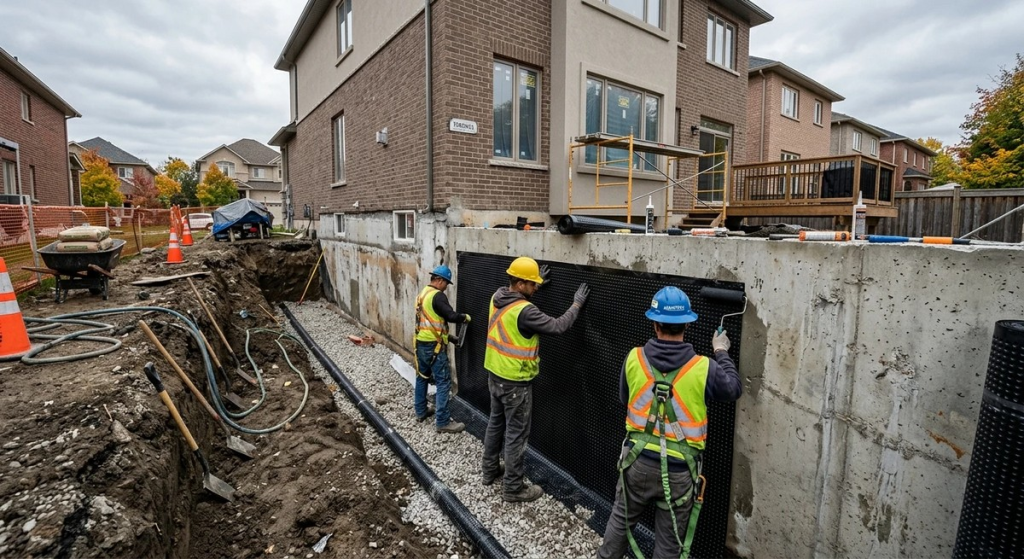
Proper site preparation ensures waterproofing work is safe, compliant, and efficient. Exterior work requires clearing the perimeter of the home to allow equipment to access the foundation. Shrubs, decking, fences, or paving stones may need to be temporarily removed or relocated. Route Homes typically documents existing landscaping conditions before work begins, ensuring accurate restoration afterward.
Interior preparation involves full removal of basement finishes within the work zone. Insulation, drywall, vapor barrier, and flooring must be taken out to reach foundation walls. If mold or moisture damage is found during demolition, remediation must be completed before waterproofing proceeds.
In homes with older plumbing, crews assess whether new drains, sump pumps, or backwater valves are needed. Electrical systems may also require upgrades to power pumps and dehumidifiers. During preparation, the renovation team sets up dust control barriers, ventilation fans, and protective coverings to keep the rest of the home clean and safe.
Professional vs DIY Waterproofing in Toronto
- Compliance With Codes
Professional contractors ensure waterproofing systems meet Toronto Municipal Code requirements and pass inspections.
- Material Quality
Contractors have access to commercial grade membranes, drainage boards, and injection materials that outperform consumer products.
- Safety Considerations
Excavation near foundations requires skilled equipment operators and strict safety procedures.
- Integrated Planning
Professionals coordinate waterproofing with plumbing, electrical, and renovation phases.
- Warranty Protection
Reputable firms provide multi year warranties that protect homeowners against future issues.
- Cost Efficiency
DIY mistakes, especially during foundation work, often lead to expensive repairs later.
How Route Homes Delivers High Quality Waterproofing During Renovation
Route Homes approaches every basement renovation with a comprehensive waterproofing mindset. The team conducts detailed assessments that evaluate soil drainage, existing cracks, plumbing conditions, and potential grading issues around the property. Every solution is tailored to the home’s structural characteristics and the renovation’s design goals.
Detailed project planning ensures waterproofing integrates smoothly into the renovation timeline. Teams coordinate excavation, plumbing modifications, membrane installation, and inspections to avoid unnecessary delays. Site safety, cleanliness, and adherence to municipal regulations remain priorities during every phase.
What sets Route Homes apart is the quality of workmanship. From premium waterproofing membranes to properly sloped drainage systems and professional crack repairs, each element is installed with long term durability in mind. The company’s commitment to quality ensures homeowners receive a basement renovation that is not only visually impressive but also structurally protected for decades.
Conclusion
Toronto’s climate, aging housing stock, and regulatory requirements make moisture protection a non negotiable part of any basement renovation. By incorporating basement waterproofing Toronto strategies early in the renovation process, homeowners safeguard their investment, enhance structural resilience, and create a healthier living environment. With expert guidance and high quality workmanship from Route Homes, every basement transformation can be both beautiful and built to withstand Toronto’s demanding conditions.